
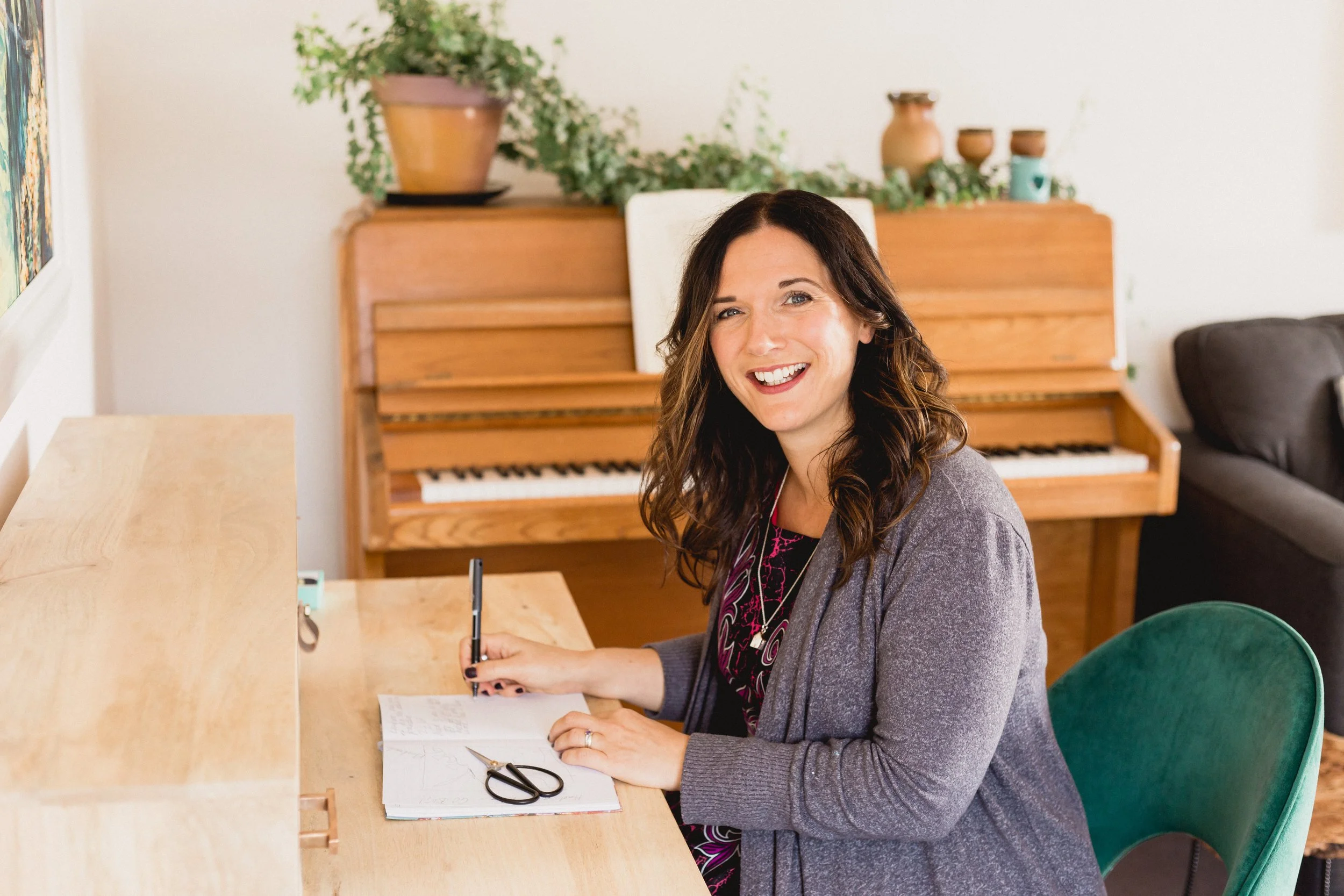
Why paint? Why write? Why both?
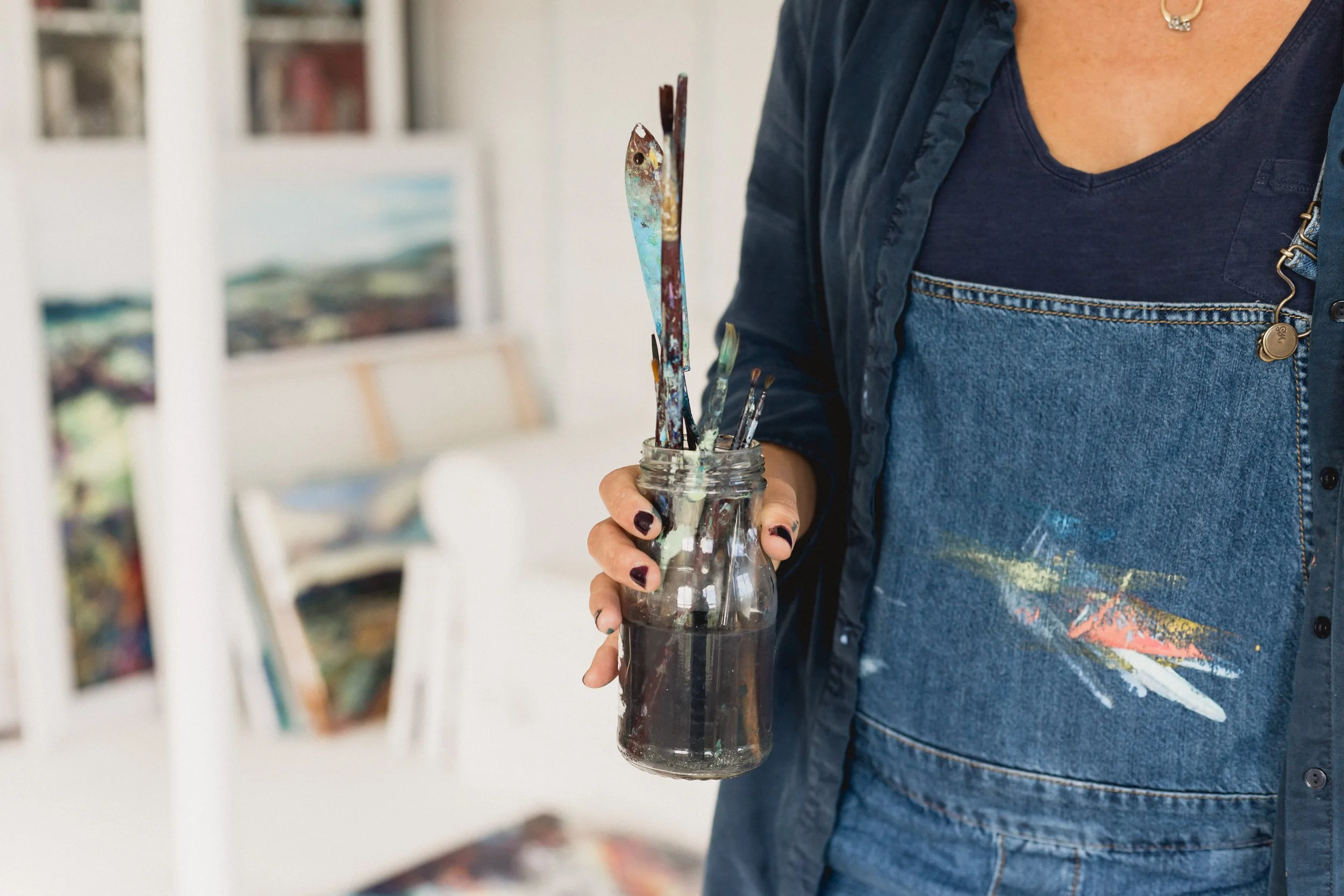
In the studio…
I have always had two great loves: Art and English. At school I was taught that my passions were two distinct subjects that led to separate careers, and I would have to choose between them. When Gray’s School of Art accepted my portfolio I took that as a signpost and so, I became an art student, then a primary school teacher, a wife, then a mother of four, and eventually now work solely as a professional artist.
But yet, all that time, my passion for writing never stopped. In fact, in the years that I doubted myself as a painter I turned to writing. I filled notebooks with my thoughts, wrote short stories, wrote poems, diary entries, and composed nascent essays. I read and read. I chose writers that inspired me to dream and wonder if I could cut it as an author. I read terrible books that I couldn’t believe had been published and yet also gave me hope that I had something to offer. I bought books on the craft of writing and made frantic notes on them as if I was studying a course. I have an entire complicated first draft of a novel in a drawer in my studio that I wrote in the wee hours before my very young children were awake. I developed it over two years, but couldn’t quite hear my writer’s voice in it and shut it away, or turned it to the wall (as I do with all paintings that I can’t quite make work). But these explorations were always to myself and for myself. I hadn’t quite found what I wanted to say yet.
Painting and (embarrassingly!) Instagram helped me find my voice. During covid, sales and interest in my work gained traction. My posts evolved from quotes I admired to writing original, personal musings. The word count restriction in a post meant I had to streamline my thoughts, and, because feedback on what I wrote was instantaneous, I had the sense of having an audience. Followers and collectors told me they enjoyed reading my stories and poems as much as seeing the paintings. This encouraged me to try writing stories inspired by the landscapes I paint. Now in my work there is an interplay between what I paint and what I write.
Last year I stepped away from Instagram to take a more targeted approach to exploring and improving my writing: I participated in a poetry slam at The Lemon Tree, attended writing workshops, submitted pieces to competitions, and write a quarterly newsletter to my mailing list here on my website. Most importantly I wrote eulogies for my Grandad and very recently my Dad that has proved to be the inspiration for my most a book that I plan to be as critical and unique to my next exhibition as my paintings.
P.S. I have recently won the Scottish Book Trust New Writers Award in the Scots category, 2026. This is a hugely exciting year for me creatively. I have big plans for an exhibition, a book, and a performance. It is my most ambitious and personal creative project yet! Watch this space!
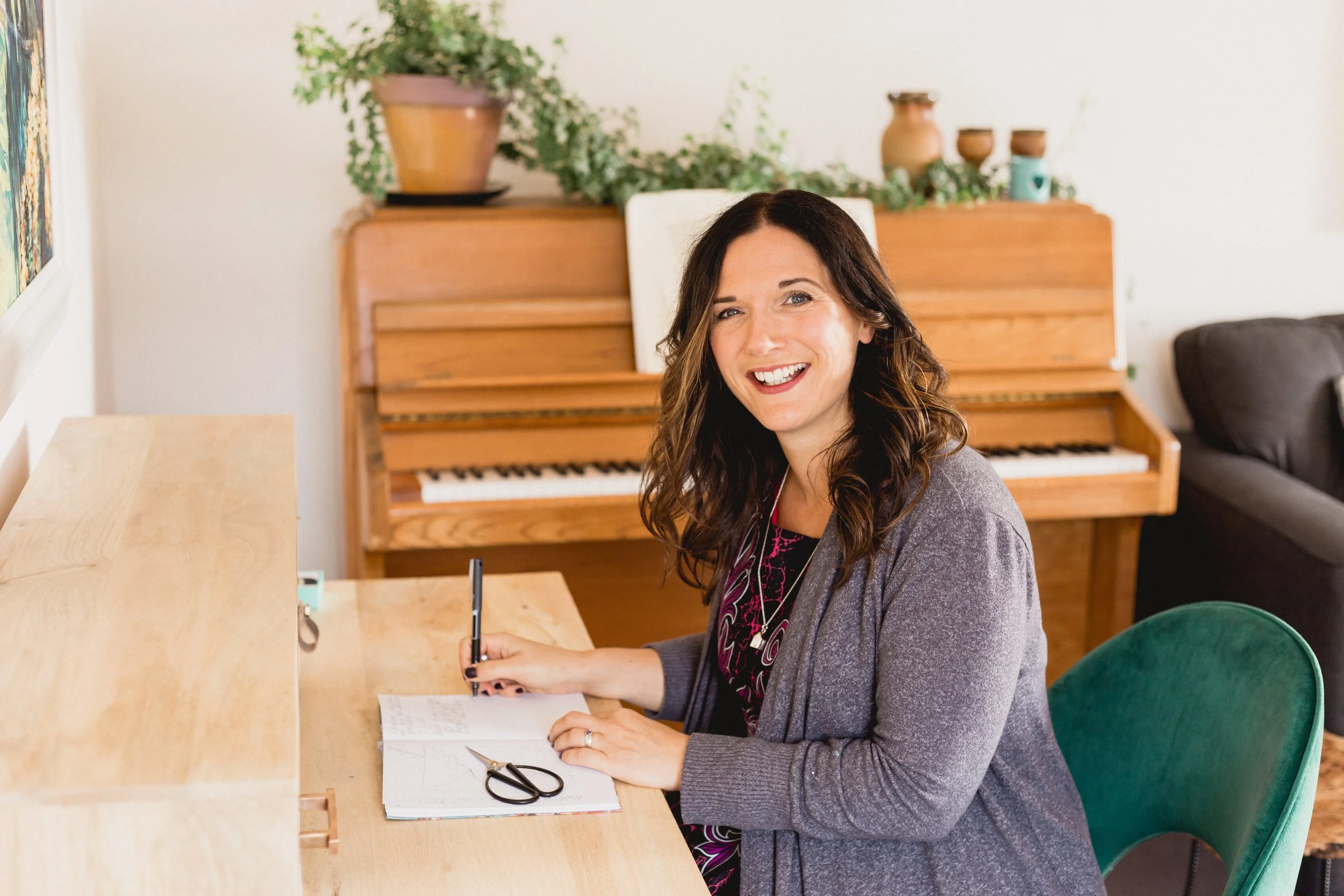
At the desk…

Ever been a successful failure?
Oh yes. Very much so. Let me explain…
Poetry Slams (as I’m sure you would agree if you have met me) is an experience that is massively out of this introverted artist’s comfort zone, but, last year I felt good about my paintings and about the writing that came from them, so I decided to challenge myself. All wonderful when the challenge is hailed a success, but after taking part, I felt such a spectacular failure that it has truly taken over a year and half to be able to write and reflect on that experience.
The poetry slam was held at a well-known venue in Aberdeen where I have gone many times over the years to watch established bands and performers come to gig. To even consider doing it as a complete beginner was deeply intimidating. Adding to these nerves was the competitive aim of the slam. The format involved preparing three poems to perform with intervals between where a panel of judges decided who would be knocked out until there was one winner. I was so nervous beforehand that I swithered whether to invite anyone to watch, but then, last minute I decided to invite a very select group of close friends along with me so that at least I knew someone in the room was on my side. The first poem I’d prepared was my most raw and personal but was also the one that I really felt was one of the most powerful pieces of writing I’ve written to date. I was nervous but I also held a strong confidence in the emotion of what I had to say.
At the side of the stage before my name was announced I took deep breaths. At the time I was reading a book that advised that people could choose the type of person they wanted to be, and so I decided in that moment that I wanted to be the type of person who could read a poem she had written, and read it well to a room of strangers. I walked on and I managed to do it. No tripping, or faltering, no stage fright. In short, I really surprised myself.
Relieved and delighted I staggered away from the spotlight into an interval while the judges conferred. My friends gathered round, congratulated me, told me they were moved by the poem and then took turns to tell me they had looked around and felt the audience had been moved by it too. The compere (an experienced and talented poet himself) took me aside to tell me how much he had liked it. My friends were jubilant, convinced it was a done deal that I would go onto the next round. Even I secretly felt fairly confident because the quality of many of the other poems had seemed to me uneven at best. However, there was one absolute standout who combined performance and quality of words and, who would go on, quite rightly I felt, to be the overall winner.
The compere hushed the room and read out the names on the paper – my name was not called. I must have believed that I had a very good chance because the force of the disappointment was strong and immediate. There was a particular coldness to sitting listening to the next stages of the competition trying not to show how upset I felt. It was not unlike the creeping cold of angry shame that overwhelms you if you were to happen overhear a friend saying terrible things about you. I hid my feelings as best I could with watery smiles and ‘oh well, better luck next time’ good sport shrugs. But on the inside it felt like a peculiar kind of wound. Before this moment belief and hope had been allowed to come and go, back and forth like birds in a hedgerow. Belief birds flitting in and out. Here and gone. There and gone. Now the birds stopped flying and singing and rustling so there was only silence, stillness and one horrible thought: I’m just not good enough.
My husband (of course), did not doubt my abilities one bit and was livid on my behalf. Between performances Dave being Dave had worked the room, chatted to the other poets at the bar and had connected the fact that all the poets that had been knocked out were (like me) newcomers, who didn’t live in the city and hadn’t attended the weekly poetry group meetings. Dave dismissed the competition as a showcase for the in-gang of Aberdeen poets and we outsiders were there to make it feel like a competition. Although I wanted to believe him, my bruised ego couldn’t listen or be comforted because it was too busy processing the rejection as proof of my lack of worth as a writer. It took me a good long while to be able to hurdle that humiliation, return to writing, try again and believe. The wee birds took a long time to come back.
But, as powerfully upsetting experiences tend to be, it was instructive. What a narrow view of success I must have! Why, for instance, wasn’t it enough to be celebrated by my husband and friends? By the compere? Why couldn’t I applaud myself for just having the bravery to just stand up and perform it? These are all important questions, versions of which I have to keep asking myself. What does it really look like and feel like to think of yourself as a success? Are you taking note of what you have already achieved? Do you stop often enough to appreciate the view?
With time and space from that upset I’m so glad I did the poetry slam. I’ve looked over that poem and I still like it - I still believe it is a good piece of writing and is one of my best and that, I try to remember, is always the most important question: Do I like it? Do I think it is any good?
An artist really can’t work on if they don’t answer yes to those questions.
It is also thanks to that poetry slam experience that I now know I’m capable of standing on a stage with a microphone and reading my writing to strangers. Months later, I was able to use that confidence to compose and read a tribute to my Grandad at his funeral. I’m still proud of myself for doing that. That experience has directly provided the backbone of the next exhibition I am forming along with its accompanying book, all of which, when finished, will become my most ambitious creative project to date. And all of that would never have been possible without that initial startling and terrible shocking wound to my ego and the pain of feeling like a failure.
On reflection I don’t think true success can be had without it, just like life can’t be appreciated without death.
That said, I still struggle with what it feels like to fail, to be criticised, to be dismissed and rejected: I probably always will. All I can do in the face of that scarecrow is to try not to let it frighten away my belief birds for long. It’s a hard lesson to learn and a pact that I have to make with my creativity every day. Try this but know that it might not work out and you will need to begin again. Over and over. And I mustn’t give up. Over and over. And I mustn’t give up.
It is a battle to the end.
And isn’t that terrible?
And isn’t that exciting?